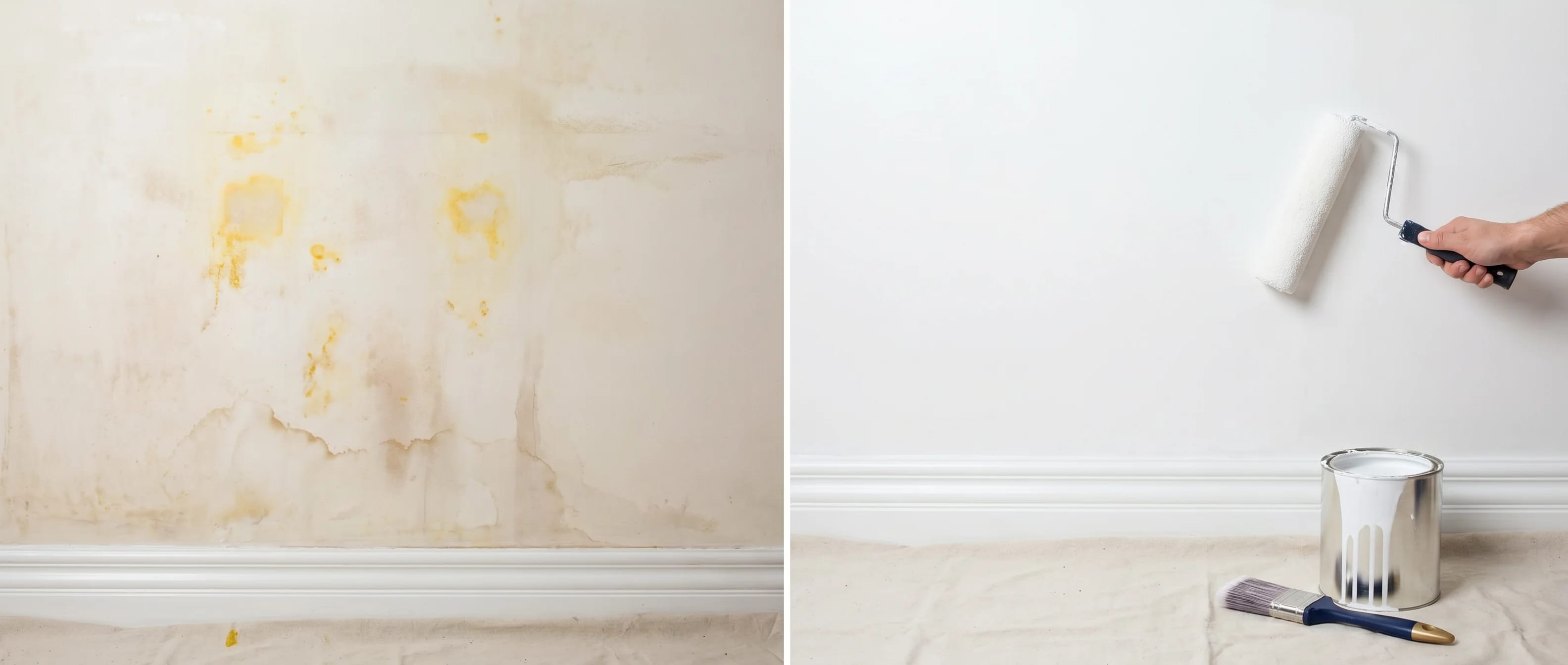


Acrylic sealant: the invisible ally of your finishes
You have probably noticed those unsightly small cracks that appear in the corners after a few months, even on carefully applied paintwork. The solution? Acrylic sealant — a step that many professional painters now consider essential, particularly in our Belgian homes subjected to climatic variations.
Contrary to popular belief, acrylic sealant is not reserved for bathrooms. It is an essential finishing product that guarantees perfectly clean and long-lasting corners in every room.
[IMAGE: gros plan sur un angle intérieur parfaitement lisse entre deux murs blancs fraîchement peints, avec une lumière rasante qui révèle la qualité de la finition]
Why do corners crack without acrylic sealant?
The natural movement of a building is the main threat to your finishes. Temperature and humidity variations — particularly pronounced in Belgium with our damp winters and sometimes warm summers — cause slight expansion and contraction in materials.
In corners, these micro-movements create tensions that paint alone cannot absorb. The result: cracks appear at junctions, where two surfaces meet. Acrylic sealant acts as a flexible buffer that absorbs these movements without cracking.
The junctions between walls and door or window frames are particularly vulnerable. These areas bring together different materials (wood, plaster, concrete) that do not respond in the same way to changing conditions.
The practical benefits of acrylic sealant on your projects
A flawless aesthetic finish
Acrylic sealant allows you to achieve perfectly straight and clean corners. It conceals minor construction imperfections and creates an invisible joint once painted. For tradespeople, it is the hallmark of careful workmanship that will make the difference in the eyes of a discerning client.
Unlike silicone, which remains glossy and cannot be painted over, acrylic sealant accepts paint perfectly. Once dry, it becomes completely invisible beneath your topcoat.
[IMAGE: application d'un cordon de joint acrylique blanc dans un angle intérieur à l'aide d'un pistolet professionnel, main gantée d'un peintre]
Effective prevention against cracks
All professionals who systematically apply acrylic sealant in internal corners confirm it: callbacks from clients about cracks decrease drastically. This simple additional step prevents a great deal of inconvenience and protects your reputation.
Acrylic sealant is a finishing and neatening product that should never replace thorough surface preparation. It must be applied in a reasonable thickness — never as a filler for significant defects.
Straightforward application
Unlike silicone, which requires considerable skill to achieve a clean joint, acrylic sealant is easily smoothed with water. A damp finger or a spatula is all it takes to obtain a neat result, even for a DIY enthusiast.
Cleaning the tools is simply done with water as long as the product has not dried. This ease of use explains why more and more tradespeople are incorporating it into their standard workflow.
When and how to apply acrylic sealant?
The right moment in your project schedule
The question of timing comes up frequently: should the sealant be applied before or after painting? Both approaches exist, but the recommended professional method is to apply the sealant after the primer coat and before the finishing coats.
This technique offers several advantages. The primer ensures good adhesion of the sealant to the substrate. The fresh sealant then blends perfectly under the finishing coats, creating a uniform surface. You also avoid issues with differences in sheen or colour.
[IMAGE: coupe schématique montrant les différentes couches sur un angle de mur, avec impression, joint acrylique et peinture de finition clairement identifiables]
Priority areas in your home
Focus your efforts on internal corners between walls and ceilings, which are particularly susceptible to structural movement. Junctions between walls and door frames also deserve special attention, as they bring together different materials.
Corners in rooms subject to humidity variations — such as bedrooms and living rooms in Belgium, where heating runs for several months a year — particularly benefit from this protection.
Acrylic sealant or silicone: making the right choice
Acrylic sealant is not suited to every situation. Its waterproofing level remains lower than that of silicone, making it unsuitable for areas in permanent contact with water, such as shower or sink joints.
For decorative painting work, however, acrylic is the obvious choice. It can be painted over, is easy to smooth and is perfectly suited to wall junctions. Reserve silicone for sanitary applications where waterproofing takes priority over a painted finish.
Hybrid mastics represent a more recent technology that combines certain advantages of both product families, but their cost remains higher for everyday use in decorative painting.
[IMAGE: deux tubes de mastic côte à côte sur un plan de travail, l'un étiqueté acrylique et l'autre silicone, avec des outils d'application]
Pygmalion's tips for a successful application
Always start by thoroughly cleaning your corners. Dust, cobwebs and various residues will compromise the adhesion of the sealant. A simple dusting is not enough: wipe with a slightly damp cloth and allow to dry.
Apply a consistent bead without excess. Acrylic sealant is a finishing product, not a filler. Too great a thickness risks shrinking as it dries or creating visible ridges beneath the paint.
Smooth immediately after application using a damp finger or a suitable tool. Working time is limited, particularly in warm weather. Do not wait for the sealant to begin forming a skin on the surface.
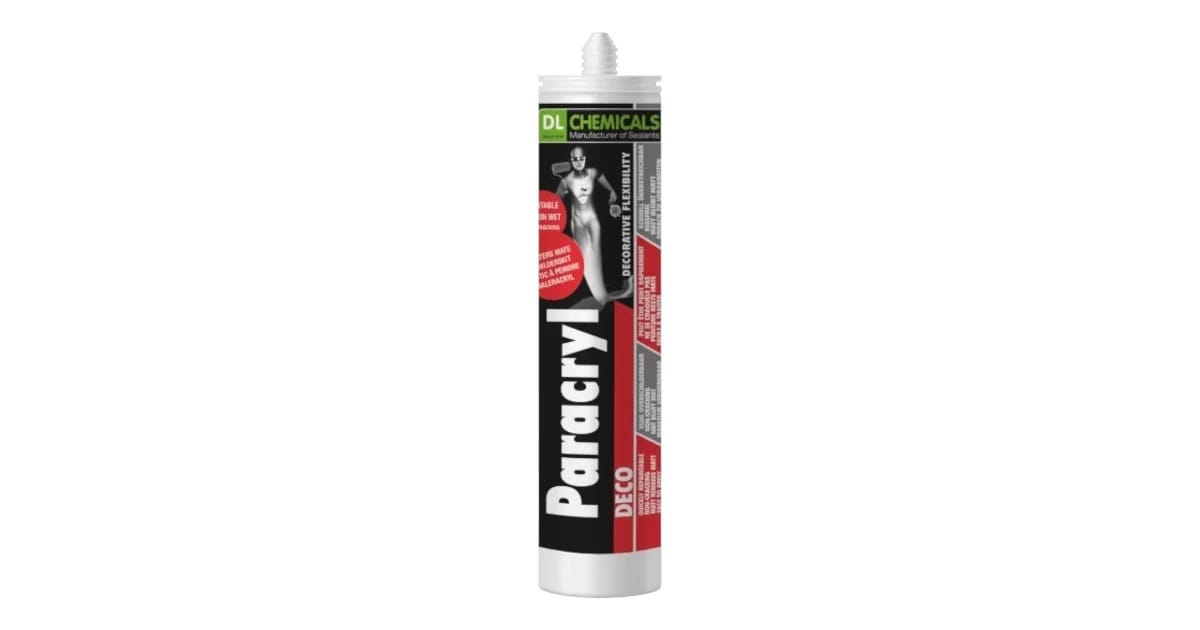
At Pygmalion, we offer a selection of acrylic sealants suited to professional requirements as well as the needs of private customers. Feel free to ask our teams for advice to choose the product best suited to your project and to Belgian conditions.