

Erfurt
VARIOVLIES V180 EN 25 M X 1 M
Variovlies V180 non-woven lining paper for renovating or designing your walls: it masks cracks (classes A+B) and provides a stable, paint-ready support. Removes dry for easy…
118,81 €
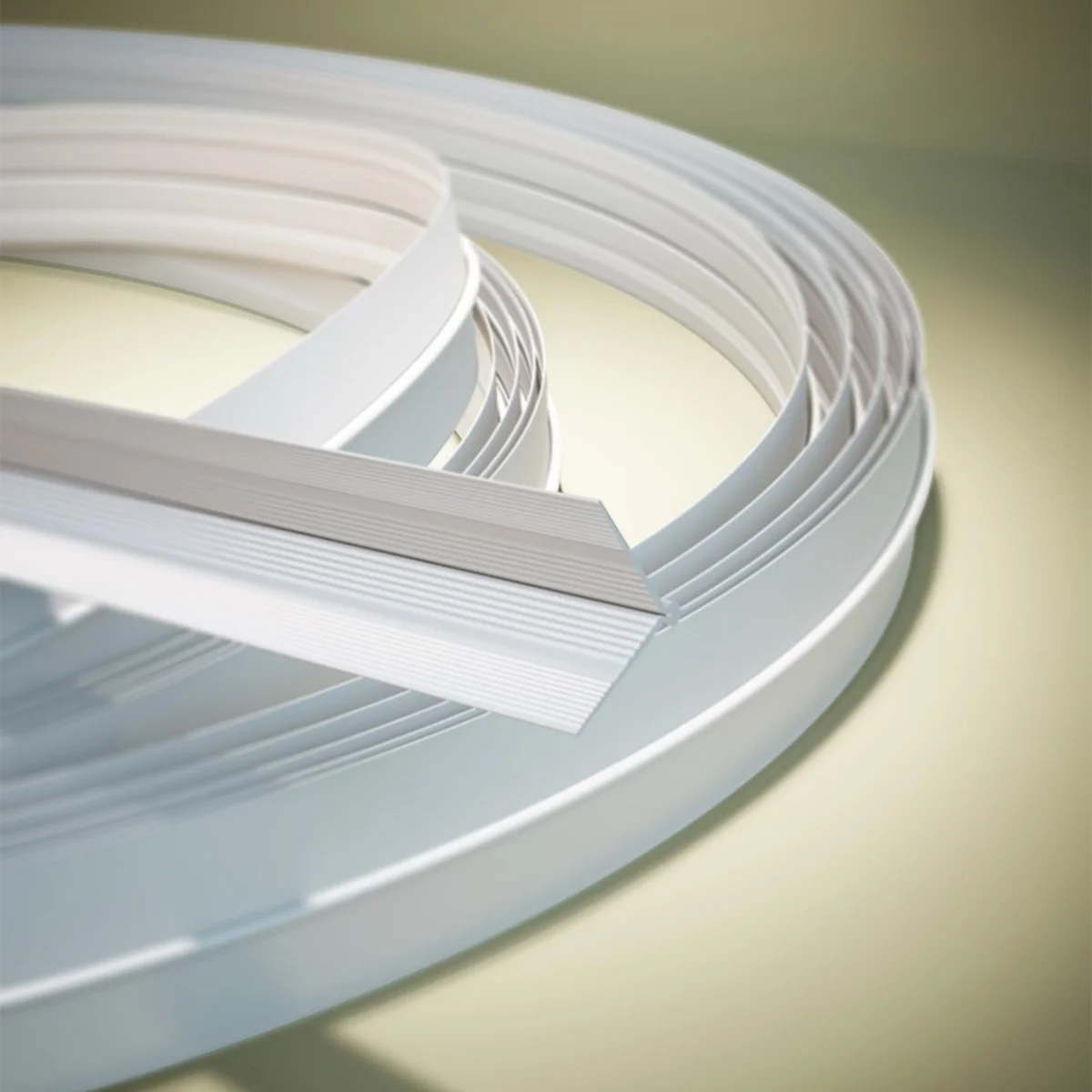
24-48hSelf-adhesive moulding, 2.60 m, for concealing joints between wall and wallpaper. Clean finish without corner cutting, quick installation by simple pressure.
Estimated delivery: 24-48h
The 2.60 m Profilo mouldings provide an impeccable finish to your wallpaper and wall covering installations. Manufactured from anodised aluminium alloy, these decorative profiles ensure a clean transition between surfaces while concealing joints and imperfections. Their impact resistance guarantees optimal durability, even in high-traffic areas.
Prepare the surface ensuring it is clean, dry and dust-free. For decorative mouldings, apply adhesive in a wave pattern along the entire length of the profile, or in a straight line for small profiles with a reduced bonding area. This technique ensures uniform adhesive distribution.
Position the moulding firmly against the wall and immediately remove any excess adhesive that seeps out. At corners, mitre-cut the profiles to achieve a perfect joint. Fill the joints between two mouldings with suitable adhesive whilst pressing the elements together. Remove excess adhesive.
After 1 to 2 hours, check the joints and remove any excess cured adhesive if necessary. For precise cutting of aluminium, use a fine-toothed hacksaw or a mitre saw fitted with a blade for non-ferrous metals.
| Finish | Anodised |
| Length | 2.60 m |
| Material | Anodised aluminium alloy |
| Resistance | Impact resistant |
| Product code | 26560 |
The most common mistake with aluminium profiles: failing to degrease the surface before bonding. Even when anodised, aluminium may have manufacturing residues. Wipe the bonding face with a cloth dampened with isopropyl alcohol to guarantee maximum adhesion. Remember to also degrease the wall surface in the contact area.
For corners, always make your cuts at 45° with a new blade. A blunt edge crushes the metal rather than cutting it cleanly, creating burrs that prevent invisible assembly. Systematically deburr with fine abrasive paper after cutting for a professional result.
Use an adhesive such as Fix Extra or a suitable mastic-adhesive for light metals. Apply in waves along the entire length for large contact surfaces. The adhesive will also serve to fill the joints between two profiles.
Anodised aluminium provides a definitive finish that normally does not require painting. If you still wish to paint them, a special adhesion primer for metals is essential to guarantee paint durability.
Use a hacksaw with a fine-toothed blade or a mitre saw fitted with a blade for non-ferrous metals. Work with a new blade to avoid crushing the metal. Always deburr the cut systematically with fine abrasive paper.
Measure the total perimeter of your room and divide by 2.60 m (length of one profile). Add 10 to 15% for cutting waste, particularly at corners. For a room with a perimeter of 20 m, allow for a minimum of 9 profiles.
Variovlies V180 non-woven lining paper for renovating or designing your walls: it masks cracks (classes A+B) and provides a stable, paint-ready support. Removes dry for easy…

Non-woven wallpaper imitating natural raffia weaving on a coloured background. Easy to apply with paste, realistic texture and calming effect for bedrooms and relaxation spaces.

Woven wallpaper inspired by esparto fibres, to dress your walls with an organic pattern and natural curves. 8 shades available, from terracotta to midnight.
